|
|
|
Many of the symbolical motifs utilise either
one or a combination of the following two methods to convey
a message or meaning:

|
| Object | Symbol of | Origin |
| peach | Longevity | Associated with longevity as a result of legends for eg. the story of Dong Fang Suo who ate the peaches stolen from Xi Wang Mu (Queen Mother of the West) and acquired a longevity of nine thousand years. |
| crane | longevity | Associated with longevity as it is the constant companion of Shou Lao (God of longevity). |
| pine tree | longevity/enduring friendship | The pine tree
is evergreen and due to its toughness and ability to withstand cold and
survive for hundreds of years, it is regarded as an emblem of longevity.
It is also commonly associated with plum and bamboo which also flourishes in the winter. Due to their common quality of not withering in the cold winter, they symbolises constant and enduring friendship in adversity. |
| lingzhi (fungus) | longevity | The lingzhi is widely regarded by the Chinese as a herb which prolong life. It is also widely mentioned in legends and believed by the Taoists as the food of the immortals and genii. |
| peony | Riches/honours | The peony is called the king of flowers or flower of riches and honours. It is regarded as an omen of good fortune if it flourishes. However, it foretells ill fortune should it fade suddenly. |
| a pair of mandarin ducks | conjugal affection | This male and female mandarin ducks always appear in pair and are particularly attached to each other. They are emblematic of conjugal affection and fidelity. |
| fish and dragon | literary aspiration/success | According to legend, every year the carps swim up the Yellow river against strong current to the famous falls of Lung-men (the dragon gate). Those which succeed in leaping up the treacheous falls are transformed into dragons. It is synonymous of literary success of students who had to clear 3 levels of examination before they could be appointed to official government posts . |
| bamboo | longevity/enduring friendship | It is considered to be a symbol of longevity as it is durable and is evergreen and flourishes throughout winter. |
| The application of the above two methods is distinctively
reflected on chinese ceramics motifs especially those which allude
to some good wishes or felicitous phrases related to happiness, prosperity,
longevity and success in life.
On happiness, prosperity & longevity |
|
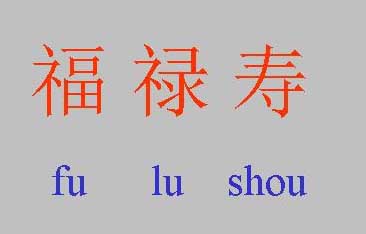
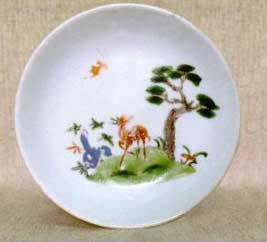
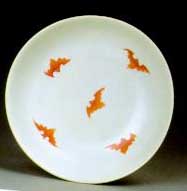
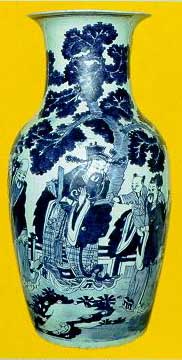
Happiness/blessings, preferment/emolument, longevity (fu, lu, shou) is a favourite theme on decorated ceramics, especially during the Qing Dynasty. It can be represented by the Taoist Triad, shou-xing, lu-xing and fu-xing, stargods of Longevity (bald old man on the left top), Preferment and Happiness (man carrying a boy). It can also be in a symbolic form, for eg. as on the motif on the left bottom. The pine tree and lingzhi fungus represent shou (longevity), deer for lu (preferment), and the bat in the sky represents fu (happiness).
|
|

|
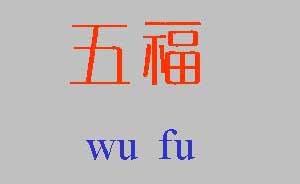
The
design of the five bats is a pictorial rebus standing for the Five Blessing:
old age, wealth, health, love of virtue and natural death.
There are other variations of the wu fu. The most common being wu fu peng shou.This is usually in a symbolic form of shou (such as shou lao on the crane, chinese character "shou" or the peach) encircled by 5 bats. This is a congratulatory form of motif. The character "peng" means to present. It is usually used to congratulate a person on his birthday and allude to wishing ("presenting") him a long life.
|
| More illustrations
........
On literary/career Success |
 |
 |
 |
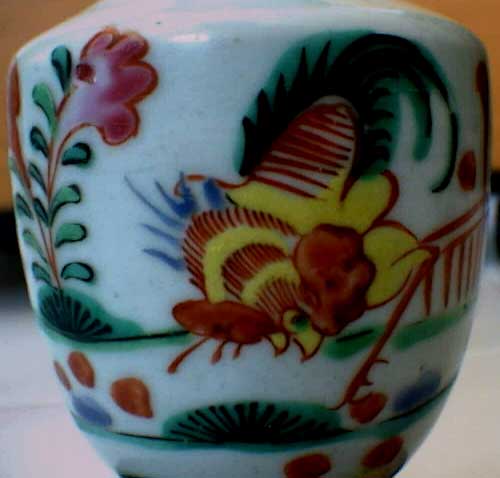 |
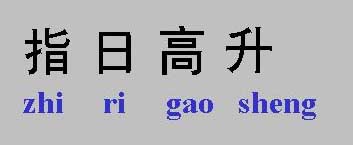
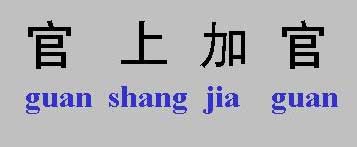
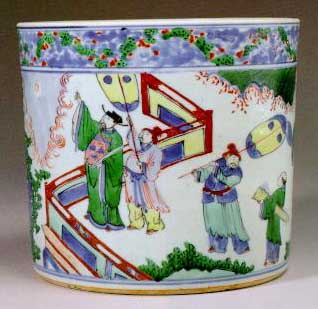
| The motif usually shows a man in mandarin robe pointing at the sun. In chinese, "zhi ri" (pointing at the sun) means imminent and "gao sheng" (rising) means promotion. Obviously, it is referring to the prospect of getting a promotion soon. | This motif plays on the character "guan" to construct the rebus design. The crown of the rooster is pronounced as "guan" . The flower in the picture is called "ji guan hua" which literally can be translated as rooster crown flower. In chinese, "guan" can also means government official. With the two "guans", it means being promoted to a higher position in the government service (guan shang jia guan ie. guan upon guan). Now, it simply means getting a promotion in your career. |
| More illustrations ........ |